Surf Boy on Surfboard Redwork Review
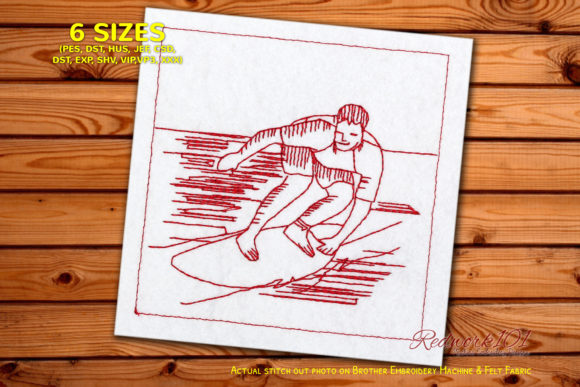
As an embroidery designer who has spent countless weekends behind a craft fair table, I have learned that the difference between a browsing customer and a buying customer often comes down to visual clarity and emotional connection. When I first loaded the Surf Boy on Surfboard Redwork onto my machine for a test run, my immediate goal was not just to see if it stitched out cleanly, but to determine if it had the "stop power" necessary for a busy handmade market. This design falls squarely into the Beach category, offering a nostalgic, playful vibe that resonates with summer lovers and coastal decor enthusiasts. In this review, I will break down how this specific machine embroidery design performs in real-world production scenarios, from tote bags to tea towels, and why it might be the perfect addition to your small shop product lineup.
First Impressions and Visual Appeal
The term "Redwork" traditionally refers to embroidery done in a single color, usually red, on white or natural fabric. This style is inherently rustic, farmhouse, and minimal. The Surf Boy on Surfboard Redwork captures this aesthetic beautifully. It is not overly complex, which is a significant advantage for craft fair sellers. When customers walk past a booth, their eyes scan for recognizable shapes. A surf boy silhouette is instantly understandable. It does not require close inspection to decipher, making it an excellent choice for high-traffic environments where you have only seconds to capture attention.
The design feels fun and easy to stitch, as described, but more importantly, it feels authentic. In a market saturated with hyper-realistic, multi-colored digital embroidery files, a clean redwork design stands out for its simplicity. It suggests a handmade quality that is both premium and approachable. For an Etsy seller or boutique maker, this translates to a versatile design asset that can bridge the gap between modern minimalism and traditional craft charm.
Product Versatility for Craft Fair Booths
One of the strongest selling points of this design is its adaptability. During my test phase, I evaluated how the Surf Boy on Surfboard Redwork would look on various blank products commonly sold at handmade markets. Here is where it shines:
- Tote Bag Design: Stitched on a natural canvas tote, the red thread pops dramatically. This is likely your highest volume seller. The design works well as a central focal point, appealing to beachgoers and students alike.
- Tea Towel Embroidery: Redwork has historical roots in kitchen linens. Placing this design on a flour sack towel creates an instant heirloom feel. It is lightweight, easy to ship, and makes for an affordable impulse buy.
- Apron Embroidery: For a higher price point, consider a full-length canvas apron. The surf theme adds a playful twist to a utilitarian item, perfect for summer barbecues or coastal home cooks.
- Embroidered Patch: If you offer patches, this design scales down reasonably well. However, you must be mindful of stitch density. Ensure the details do not become muddy when reduced in size.
- Caps and Pouches: While possible, curved surfaces like caps require careful hooping. The design’s linear nature might distort slightly on highly curved fabric, so test thoroughly before committing to batch production.
For those creating printable mockups for online listings, this design photographs exceptionally well. The high contrast between red thread and light fabric creates crisp images that look professional on Etsy or Instagram, reducing the need for extensive photo editing.
Production Practicality and Batch Selling
From a business owner’s perspective, time is money. The description notes that this is a high-quality embroidery design that is fun and easy to stitch. In practice, this means lower thread breaks and faster run times compared to dense, multi-color designs. For a craft fair seller preparing inventory, the ability to stitch multiple units quickly is crucial. The Surf Boy on Surfboard Redwork allows for efficient batch production. You can hoop five tea towels, hit start, and move on to packing orders while the machine runs.
Furthermore, because it is a single-color design, you eliminate the time-consuming process of thread changes. This consistency helps maintain brand consistency across your booth display. Imagine a table where every item, from pillow covers to market bags, features the same striking red accent. This visual cohesion strengthens your brand identity and makes your booth look curated and professional.
Careful-Use Notes and Technical Considerations
While the design is user-friendly, there are technical nuances to consider before you begin commercial embroidery production. First, always check the stitch density. Even in redwork, if the satin stitches are too dense for lightweight fabric, you may experience puckering. Use a cut-away stabilizer for stretchy fabrics like t-shirts, and a tear-away for stable woven fabrics like cotton twill or linen.
Fabric texture also plays a role. On textured towels, the fine lines of the surfboard may get lost. I recommend testing on the exact blank you intend to sell. Additionally, while red on white is classic, consider how the design looks on dark fabric. You may need to change the thread color to white or yellow to maintain visibility, but always verify that the design file allows for easy color changes without losing definition.
Another critical point is sizing. The description mentions that the Stitch Box shown in the picture is optional. This implies the design might be part of a larger set or frame. Ensure you know the exact hoop size required. If the design is too large for a standard 4x4 hoop, you will need a 5x7 or larger machine. Always confirm these details before purchasing the digital embroidery file to avoid compatibility issues.
Designer Tips for Maximum Sales
To get the most out of the Surf Boy on Surfboard Redwork, follow these practical steps:
- Test on Scrap Fabric: Never stitch directly on your final product without a test run. Check for thread tension and registration.
- Check Thread Contrast: Use a high-quality rayon or polyester thread that has a slight sheen. This adds a touch of luxury to the simple redwork style.
- Create Real Mockups: Instead of relying solely on digital previews, stitch one sample item and photograph it in natural light. Use this image for your primary listing photo.
- Confirm Commercial Licensing: Before selling any finished product, ensure your purchase of the design assets includes a commercial license. Most designers allow this, but it is vital to read the terms.
- Bundle Products: Create gift sets, such as a tote bag paired with a matching tea towel. This increases the average order value and moves inventory faster.
In conclusion, the Surf Boy on Surfboard Redwork is a solid contender for any embroidery business focusing on Beach-themed or summer-centric collections. Its strength lies in its simplicity, speed of production, and broad appeal. By understanding its technical requirements and leveraging its visual clarity, you can turn this simple design into a profitable staple of your craft fair inventory. Whether you are an experienced Etsy seller or a new handmade shop owner, this design offers a low-risk, high-reward opportunity to expand your product range with confidence.