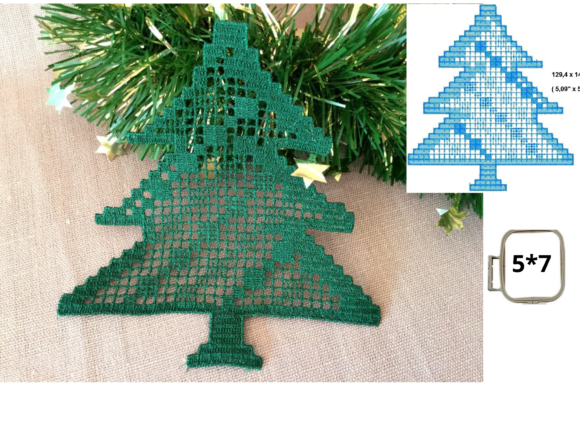
Christmas Tree FSL: A Designer's Review for Boutique Sweatshirts
As an embroidery designer who spends countless hours digitizing and testing patterns for small clothing brands, I know that the difference between a good product and a best-seller often comes down to one specific detail: the quality of the machine embroidery design. When I first opened the Christmas Tree FSL file, my immediate goal was to determine if it could carry the weight of a premium holiday collection. For Etsy sellers and apparel decorators, the stakes are high. You aren't just stitching a tree; you are building a brand identity on fabric.
First Impressions: Mood and Stitching Personality
The moment you load the Christmas Tree FSL into your software, the layout speaks volumes about its intended vibe. This isn't a blocky, pixelated graphic from the early days of digital embroidery. The description promises a "beautiful Christmas embroidery" that elevates festive projects, and visually, the design delivers a sense of delicate sophistication. Free-standing lace (FSL) is notorious for being tricky; if the stitch density is too low, it falls apart. If it's too high, it becomes stiff and cardboard-like.
In my initial assessment, the stitching personality of this design feels distinctly elegant and decorative rather than purely rustic or playful. It carries a feminine touch that would look incredible on oversized hoodies or cozy seasonal apparel where softness is key. The openwork nature of FSL allows the fabric texture of the garment to peek through, creating a layered visual effect that flat satin stitches simply cannot achieve. For a boutique brand looking to stand out in a crowded market, this level of detail suggests a higher price point and greater perceived value.
Visualizing the Design on Real Apparel
Let's move from the screen to the hoop. Imagine preparing a limited sweatshirt drop for a small online shop. How does Christmas Tree FSL translate to actual garments?
- Neutral Sweatshirts: On cream, oatmeal, or heather grey fleece, the lace structure creates a subtle shadow play. It feels organic and high-end, perfect for a "quiet luxury" aesthetic.
- Dark Fabric: Placing this design on navy or charcoal requires careful consideration of thread colors. A metallic gold or bright white thread would pop dramatically against the dark background, making the tree look like a glowing ornament. However, because FSL relies on its own structure, ensure the contrast is sharp enough so the details don't get lost in the pile of the fleece.
- Pastel Colors: For a softer, more youthful appeal, pastel pink or mint green hoodies paired with matching or slightly darker thread tones create a monochromatic, chic look. This approach feels very current for Gen Z-focused boutiques.
- Oversized Hoodies: The scale of the design matters here. If the tree is too small, it gets swallowed by the bulk of an oversized fit. Ideally, this design works best as a chest placement or a large back design where the intricacy of the lace can be appreciated from a distance.
Technical Considerations for Commercial Success
Before committing to a production run of fifty units, any serious Etsy seller or embroidery shop owner needs to address the practical realities of machine execution. While the product description notes that this digital embroidery file comes with multiple embroideries (likely referring to size variations), it does not specify exact stitch counts or hoop requirements. This is a critical reminder: always check the specific file details included in your download folder before hooping.
When working with FSL on thick materials like sweatshirt fleece, the choice of stabilizer is non-negotiable. Unlike standard appliqué, FSL usually requires a heavy water-soluble stabilizer to build the design upon, which is then washed away. However, when applying it onto a garment, you must ensure the underlying fabric is stable enough to support the lace without puckering. I recommend using a cut-away stabilizer beneath the fleece if the stitch density of the tree is significant, ensuring the finished product maintains its shape after multiple washes.
Another concern is durability. Customers expect their handmade product to last. Does the lace hold up to friction? In my experience, well-digitized FSL is surprisingly durable, but sharp edges or long jumps can be snag points. Inspect the back of your test stitch-out. If there are excessive jumps or loose threads, trim them meticulously. For commercial embroidery use, the design must feel robust enough to withstand the rigors of daily wear.
Branding and Market Appeal
Why choose Christmas Tree FSL over a standard filled design? It comes down to brand perception. In the world of custom apparel, uniqueness drives buyer trust. A generic filled tree looks like something bought at a big-box store. A free-standing lace tree signals effort, artistry, and attention to detail. This distinction directly affects product value.
For lifestyle product photography and printable mockups, this design offers excellent visual interest. The light passing through the lace holes creates depth in photos, making your Instagram feed or Etsy listings more engaging. It tells a story of craftsmanship. When a customer sees the intricate needlework up close, they understand why your small shop product costs more than a mass-produced alternative. It reinforces your identity as a creator who cares about design assets and quality execution.
Placement Strategies for Maximum Impact
To get the most out of this embroidery file, consider unconventional placements. While the left chest is a classic choice for a hoodie design, think about sleeve accents. A smaller version of the tree running down the forearm adds a modern, sporty luxe feel. Alternatively, a large-scale version centered on the back of a zip-up hoodie makes a bold statement piece. Just remember to verify the hoop size compatibility for these larger placements; if the design exceeds your machine's maximum area, you may need to explore splitting the design or sourcing a larger frame.
Ultimately, Christmas Tree FSL is a versatile asset for the holiday season. It bridges the gap between traditional holiday motifs and contemporary fashion trends. Whether you are decorating for a local craft fair or fulfilling orders for an international online store, this design has the potential to be a standout star in your collection. Just remember to test your tension, choose your stabilizer wisely, and let the unique texture of the lace do the talking. With the right execution, this design doesn't just decorate a sweatshirt; it defines a season.