Jumping Horse Redwork: A Designer’s Review
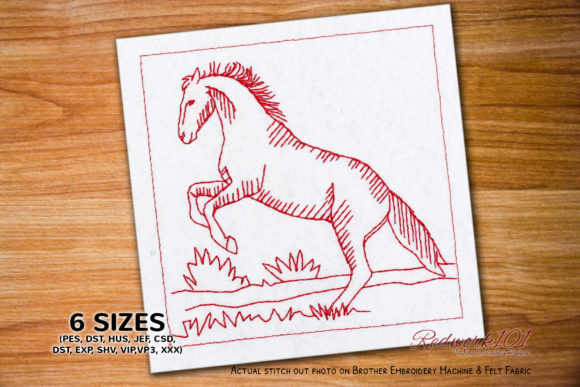
As an embroidery designer who has spent countless weekends behind a craft fair table, I know that not every design translates into a bestseller. Some designs are technically impressive but visually quiet, while others capture attention instantly. When I first loaded the Jumping Horse Redwork onto my machine for a test run, I was looking for that specific spark—the kind of visual energy that stops a browser in their tracks at a busy market. This design, featuring an impressive horse rearing on a grassy plane, offers a dynamic silhouette that bridges the gap between rustic charm and bold modern aesthetics.
First Impressions and Visual Impact
The immediate appeal of Jumping Horse Redwork lies in its motion. Unlike static portraits, this Wild Animals themed piece captures a moment of action. The redwork style, traditionally known for its single-color simplicity, allows the shape of the horse to take center stage without the distraction of complex shading or multi-colored fills. This makes the design feel both classic and contemporary. It is bold enough to be seen from across the aisle yet refined enough to fit within a minimalist brand aesthetic.
The optional Box Stitch mentioned in the product description is a crucial detail for versatility. In my experience, having the option to include or exclude a border allows you to adapt the machine embroidery design to different products. A bordered version might look more like a traditional patch or emblem, suitable for structured items, while the borderless version flows more naturally on soft goods like tea towels or tote bags.
Product Applications for Craft Fair Sellers
When preparing your booth for a weekend craft fair, product selection is everything. Here is how I envision this design performing across various handmade items:
- Tote Bags and Market Bags: This is arguably the strongest application. A large-scale tote bag design featuring the rearing horse creates a statement piece. Shoppers love functional art, and the high contrast of redwork against natural canvas or dark denim ensures the image pops.
- Aprons and Kitchen Textiles: For the home goods section, apron embroidery using this motif adds a touch of equestrian elegance. Similarly, tea towel embroidery benefits from the open nature of redwork, which remains soft and flexible against the fabric texture, avoiding the stiff "cardboard" feel of dense satin stitches.
- Embroidered Patches: If you utilize the optional box stitch, this design becomes an excellent candidate for an embroidered patch. Patches are low-commitment purchases for customers and high-margin items for sellers. The clear lines of the horse ensure the patch remains legible even at smaller sizes.
- Caps and Headwear: Placing this on a cap requires careful consideration of the curved surface. The rearing posture works well on the front panel, but you must ensure the hoop size and placement do not distort the horse’s proportions. It is best suited for unstructured caps where the fabric can conform to the hoop without excessive pulling.
Production Practicality and Batch Efficiency
For any Etsy seller or small shop owner, time is money. One of the greatest strengths of Jumping Horse Redwork is its potential for batch production. Redwork designs typically have lower stitch density compared to full-fill designs. This means faster run times on your machine and less thread consumption. You can produce a dozen tote bags or pillows in the time it might take to complete half that number with a complex, multi-layered design.
Furthermore, the simplicity of the color scheme simplifies your workflow. You are not constantly changing spools or managing complex color transitions. This consistency helps maintain brand consistency across your small shop product line. Whether you are selling digital files or finished goods, the ease of reproduction makes this a reliable staple in your inventory.
Navigating Fabric and Technical Challenges
While the design is robust, there are practical considerations to keep in mind. The description notes that the color of the outer box varies in most designs unless specified. This variability means you must be intentional about your thread colors. High contrast is key. On light fabrics, a deep red or navy works beautifully. On dark fabrics, consider using a bright white or metallic thread to ensure the horse does not disappear into the background.
Be cautious with textured fabrics. While the design works well on standard cotton, heavily textured towels or thick wool may obscure finer details of the grassy plane. Always test the design on scrap fabric that matches your final product material. Check the registration of the stitches and ensure the stabilizer you choose complements the fabric weight. For stretchy materials like jersey or thin cotton, a cut-away stabilizer might be necessary to prevent puckering, whereas tear-away may suffice for stable woven fabrics.
Marketing and Online Presence
In the digital realm, presentation is paramount. When creating listings for your digital embroidery file or finished products, the clarity of this design is a major asset. It photographs exceptionally well because the lines are distinct. Use this to your advantage in your printable mockup strategies. Create lifestyle images that show the horse in motion, perhaps paired with rustic props like leather reins or wildflowers to enhance the Wild Animals theme.
For those selling the design assets rather than the finished product, emphasize the commercial viability. Highlight that this is a versatile commercial embroidery ready file that can be scaled for various applications. Mention its suitability for both novice and experienced embroiderers due to the straightforward color changes and manageable density.
Final Designer Notes and Recommendations
Before you commit to a large production run or list this as a new item in your store, follow these essential steps:
- Verify Licensing: Confirm the commercial licensing terms provided with the file. Ensure you have the right to sell finished products made with this design if that is your business model.
- Check File Formats: Ensure the embroidery file includes the formats compatible with your specific machine brand. Do not assume universal compatibility without checking.
- Create Real Mockups: Digital mockups are helpful, but nothing replaces a physical sample. Stitch out one unit on each type of fabric you plan to use. Assess the hand-feel and drape.
- Evaluate Scale: Determine the optimal size for each product. The design may need to be resized for a pocket versus a full-back pillow cover. Ensure that resizing does not compromise the integrity of the lines, particularly in the legs and mane of the horse.
In conclusion, Jumping Horse Redwork is a strong contender for any embroidery business looking to expand its craft fair product lineup. It balances artistic appeal with production efficiency. By leveraging its bold silhouette and adapting it thoughtfully across different mediums, you can create a cohesive and attractive collection that resonates with buyers who appreciate quality handmade product craftsmanship. Whether you are enhancing a simple tote or creating a standout patch, this design offers the versatility and visual impact needed to succeed in today’s competitive handmade market.