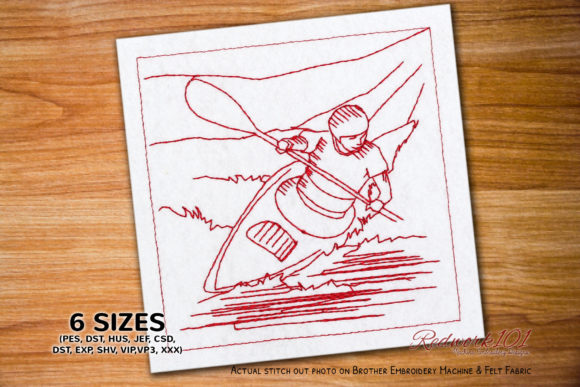
Review: Boy Kayaking in the River Redwork Design
As an embroidery designer who has spent years digitizing and testing files for small businesses, I approach every new machine embroidery design with a critical eye. It is not just about whether the image looks cute on a screen; it is about how that design performs when stitched out on real fabric, worn by customers, and washed repeatedly. Today, I am reviewing Boy Kayaking in the River Redwork, a piece categorized under Transportation and Embroidery, to determine its viability for branded merchandise and commercial use.
The first impression of this design is one of spirited adventure. The title suggests a scene of outdoor activity, and the description promises to inspire dignity and positivity. From a branding perspective, this evokes feelings of resilience, nature, and active lifestyles. For small business owners, particularly those in the outdoor retail, sports coaching, or eco-tourism sectors, this visual narrative is powerful. It does not feel overly corporate or stiff; instead, it carries a handmade, approachable warmth that resonates with modern consumers who value authenticity.
Visual Personality and Brand Fit
When evaluating Boy Kayaking in the River Redwork for brand identity, we must look at its stylistic roots. Redwork is a traditional style characterized by single-color stitching, often using red thread on white fabric, though modern interpretations vary. This technique creates a clean, classic look that avoids the heaviness of full-fill satin stitches. For a small business, this is advantageous. It signals a vintage or rustic aesthetic without appearing dated.
If you run a boutique selling handmade goods, this design serves as an excellent asset. It feels decorative yet purposeful. For a café or bakery looking to expand into lifestyle merch, this design could work beautifully on tote bags or aprons, suggesting a love for local rivers and outdoor leisure. The simplicity of the line work ensures that the design remains legible and professional, avoiding the clutter that often plagues complex digital embroidery files.
Real-World Applications for Small Business Merch
The versatility of this design is its strongest selling point for commercial embroidery projects. Let us break down where Boy Kayaking in the River Redwork performs best in a real-world scenario.
- Embroidered Patches: This is perhaps the most lucrative application. A redwork-style patch can be easily cut and sewn onto jackets, backpacks, or hats. Because the design relies on outline stitching rather than dense fills, the patch remains flexible and lightweight, which customers prefer for comfort.
- Custom Apparel and Uniforms: For staff uniforms in outdoor centers or summer camps, this design works well as a chest logo accent. It is bold enough to be recognized from a distance but subtle enough to maintain a professional appearance on work shirts.
- Cap Embroidery: Hats are a staple of small business merch. However, curved surfaces require careful digitizing. This design, with its likely linear structure, should translate well to the front panel of a baseball cap, provided the width is adjusted to fit the standard hoop size constraints.
- Tote Bag Design: Canvas totes are popular for eco-friendly brands. The single-color nature of redwork reduces thread costs and production time, making it a cost-effective option for high-volume orders while still looking like a premium, handmade product.
- Apron Embroidery: For florists, potters, or bakers, an apron with this motif adds a personal touch. It suggests that the wearer values balance and flow, aligning with the description’s promise of sailing through life with dignity.
Technical Considerations and Production Notes
While the aesthetic appeal is strong, any experienced embroiderer knows that technical execution is where profits are made or lost. Before adding Boy Kayaking in the River Redwork to your catalog of design assets, there are several critical factors to review.
First, consider the stitch density. Redwork designs typically have lower stitch density compared to filled logos. This is generally good for fabric drape, but it means the underlying fabric texture will show through. You must choose your base material wisely. A smooth cotton or twill will provide the best contrast and clarity. Avoid highly textured fabrics like heavy wool or fuzzy fleece, as the fine lines of the kayaker may get lost in the pile.
Second, pay attention to the hoop size. The description mentions it is suitable for jackets, hats, and leggings. This implies a medium-sized design. Always check the specific dimensions of the digital embroidery file before purchasing. If you intend to use it on a small pocket or a child’s garment, ensure the details do not become too small to stitch cleanly. Tiny lettering or intricate outlines can break or look messy if scaled down too far.
Stabilizer selection is also crucial. Since this is likely an outline-heavy design, using a cut-away stabilizer for stretchy fabrics like leggings or jersey t-shirts is essential to prevent puckering. For woven fabrics like denim jackets or canvas totes, a tear-away stabilizer may suffice, but always test on a scrap piece first.
Where to Use Caution
Not every application is perfect. I advise caution when using this design on dark uniforms if you are sticking strictly to the traditional redwork color palette. Red thread on black fabric can lack contrast and may appear dull under certain lighting. In such cases, consider adapting the thread colors to a brighter orange or yellow to maintain visibility, or use it as a secondary accent rather than the primary logo.
Additionally, be mindful of items that undergo frequent, harsh washing. While embroidery is durable, fine outline stitches can snag more easily than broad satin columns. If this design is for workwear that faces rough conditions, ensure the stitch length is optimized for durability. Ask your digitizer or check the file notes for recommendations on thread type—polyester threads generally offer better colorfastness and strength than rayon for active wear.
Enhancing Brand Identity and Customer Trust
Using a distinct design like Boy Kayaking in the River Redwork helps build brand recognition. It moves your merchandise away from generic clipart and toward a curated, thoughtful collection. When customers see a consistent visual theme across your printable mockup materials, social media, and finished products, it builds trust. It shows that you care about the details.
For Etsy sellers and crafters, this design can be a centerpiece for a seasonal collection. Pair it with nature-themed quotes or complementary floral elements to create a cohesive line. The "Transportation" category might seem niche, but in the context of outdoor lifestyle branding, it speaks to movement, journey, and exploration. These are emotional triggers that drive buyer engagement.
Final Designer Recommendations
Before you commit to a large production run, follow these practical steps:
- Test in Black and White: Stitch the design out in black thread on white fabric first. This removes the distraction of color and allows you to evaluate the clarity of the lines and the balance of the composition.
- Check Commercial Licensing: Ensure that the license terms for the digital embroidery file allow for physical product sales. Most designers offer different licenses for personal vs. commercial use.
- Create a Mockup: Use a printable mockup to visualize the design on different products. Show it to a few potential customers or peers for feedback on size and placement.
- Verify File Formats: Confirm that the file comes in the format compatible with your machine (PES, DST, JEF, etc.). The description mentions "The Box Stit," which may refer to a specific stitch type or file structure, so clarify this with the seller if unsure.
In conclusion, Boy Kayaking in the River Redwork is a promising addition to a small business’s design library. It offers a blend of classic charm and active spirit that fits well within the current market trends for handmade, meaningful merchandise. By paying attention to fabric choice, stabilizer use, and placement, you can transform this simple embroidery file into a high-value asset for your brand. Whether used on a rugged jacket or a delicate tote, it has the potential to inspire your customers and elevate your product offerings.