Pepper Embroidery Design: A Practical Review
As a designer who spends more time staring at stitch simulations than actual fabric, I have learned to be skeptical of new machine embroidery design releases. The market is flooded with generic clip-art converted into thread, often lacking the nuance required for a professional finished product. However, when I recently downloaded Pepper, a charming Food-themed Embroidery motif, I was curious to see if it held up under the microscope of real-world application. This review is not just about aesthetics; it is about how this design performs when you are trying to run a craft business or create a meaningful personalized gift.
First Impressions and Visual Personality
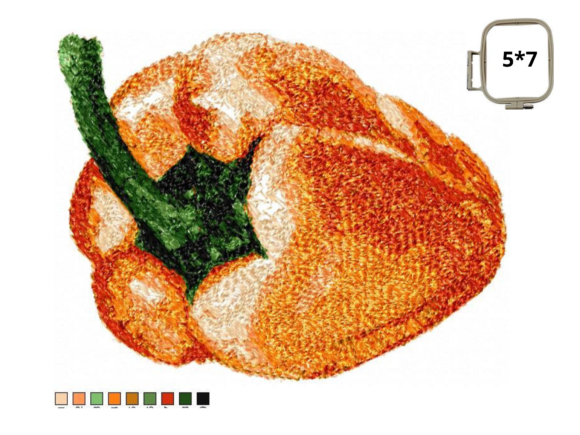
The first thing that strikes you about Pepper is its approachable simplicity. In the world of design assets, complexity often masquerades as quality, but experienced Etsy sellers know that clean lines sell better. The design captures the essence of its subject without getting bogged down in unnecessary noise. It feels organic and warm, creating a mood that is both playful and sophisticated. This visual personality makes it incredibly versatile. It does not scream for attention; rather, it invites a closer look, which is exactly what you want for a high-end handmade product.
For those of us who work with digital embroidery file libraries, finding a design that balances detail with stitch efficiency is rare. Pepper appears to strike this balance well. The layout suggests a thoughtful distribution of satin stitch borders and fill stitch interiors, avoiding the dense, cardboard-like feel that plagues many amateur designs. This attention to structural integrity is crucial when you are considering how the design will drape on a garment or sit on a home decor item.
Real-World Application: The Tote Bag Test
To truly evaluate Pepper, I imagined a specific scenario: a custom order for a local farmer’s market vendor who needed branded tote bag design options. She wanted something that reflected fresh, organic produce without being overly literal. Pepper fit this brief perfectly. When visualized on a natural canvas tote, the design’s earthy tones and simple shape complemented the texture of the fabric rather than fighting against it.
In this context, the design acts as a subtle brand marker. It is not so large that it overwhelms the bag, nor so small that it gets lost in the weave of the canvas. For small shop product lines, this scalability is vital. Whether you are creating a single embroidered patch for a jacket or printing a printable mockup for your online store, Pepper maintains its clarity. It suggests quality and care, two traits that drive customer trust and increase the perceived value of your commercial embroidery projects.
Fabric Considerations and Stitch Performance
One of the most critical aspects of any embroidery project is how the design interacts with different materials. Pepper seems robust enough for standard cottons and poly-cotton blends, which are staples for custom apparel and kitchen linens. However, as a reviewer, I must advise caution with certain fabrics. If you are planning to use this on a textured towel or a thick fleece sweatshirt embroidery project, you need to pay close attention to your stabilizer choice.
The design likely utilizes a mix of running stitch for underlay and denser stitches for coverage. On stretchy fabrics, such as jersey knits used in baby embroidery items, inadequate stabilization could lead to puckering. Always test on scrap fabric first. I recommend using a cut-away stabilizer for garments that will be washed frequently, ensuring the thread colors remain vibrant and the shape stays true. For woven fabrics like aprons or pillow covers, a tear-away might suffice, but always check the back of your hoop to ensure no excessive pull has distorted the fabric texture.
Navigating Small Hoops and Detailed Areas
If you are working with smaller hoop size constraints, such as 4x4 inches for caps or baby bibs, you must verify the dimensions of Pepper before purchasing. While the design is superb, shrinking any embroidery motif too much can cause stitch merging, where distinct elements blur together. If Pepper includes fine details or tiny lettering, these may become illegible at reduced sizes. For holiday embroidery gifts like ornaments or small sachets, consider simplifying the color palette to enhance contrast rather than reducing the size excessively.
Additionally, when stitching on curved surfaces like caps, the placement of the design is paramount. The visual weight of Pepper should be centered carefully to avoid distortion around the seams. A poorly placed design can look amateurish, regardless of how good the applique design or standard fill looks in simulation. Take the time to mark your center points accurately.
Commercial Viability and Brand Consistency
For creative entrepreneurs and digital product sellers, the versatility of a design determines its ROI. Pepper offers strong potential for various niches. It works beautifully for kitchen-themed merchandise, such as tea towels and aprons, appealing to home cooks and foodies. It also fits seamlessly into nursery decor, adding a touch of whimsy to blankets or wall hangings. The key to leveraging this design is consistency. Use the same thread colors across your product line to build brand recognition.
When creating listings for your small business merchandise, use high-quality photos that show the texture of the stitches. Buyers of handmade product items want to see the craftsmanship. Show close-ups of the satin stitch edges and the smoothness of the fills. This transparency builds confidence and reduces return rates. Furthermore, since Pepper comes with multiple embroidery file formats, ensure you are using the correct format for your machine to avoid conversion errors that can alter stitch density.
Practical Designer Notes
Before you commit to a large production run or list Pepper in your shop, keep these practical tips in mind:
- Check Licensing: Always confirm the license terms. Can you use this for commercial embroidery? Are there restrictions on the number of physical items you can sell? Never assume; read the documentation provided with the digital embroidery file.
- Test Thread Contrast: The design may look great in the preview, but real thread behaves differently. Test high-contrast combinations (like white on black) and low-contrast ones (like cream on beige) to see which highlights the details best.
- Inspect Small Details: Zoom in on your software. Look for potential jump stitches or dense areas that might break needles. Trim jumps manually if necessary for a cleaner finished product.
- Mockup Verification: Create black and white mockups to check the silhouette. If the design loses its identity without color, it may rely too heavily on hue rather than form. Pepper generally holds its shape well, but this is a good habit for any embroidery project.
- Fabric Compatibility: Remember that dark fabrics may require an underlay or a lighter topstitch thread to prevent the base material from showing through the fill stitch areas.
Final Verdict
Pepper is a solid addition to any designer’s library. It is not just a pretty picture; it is a functional, well-constructed machine embroidery design that respects the limitations and possibilities of the medium. For hobbyists and makers, it offers a satisfying stitch-out experience. For business owners, it provides a reliable asset that can elevate a range of products from custom apparel to home goods. By paying attention to fabric choice, stabilization, and placement, you can ensure that every item featuring Pepper reflects the professionalism and care your customers expect. It is a design that earns its place in your rotation, proving that sometimes, the simplest motifs make the biggest impact.